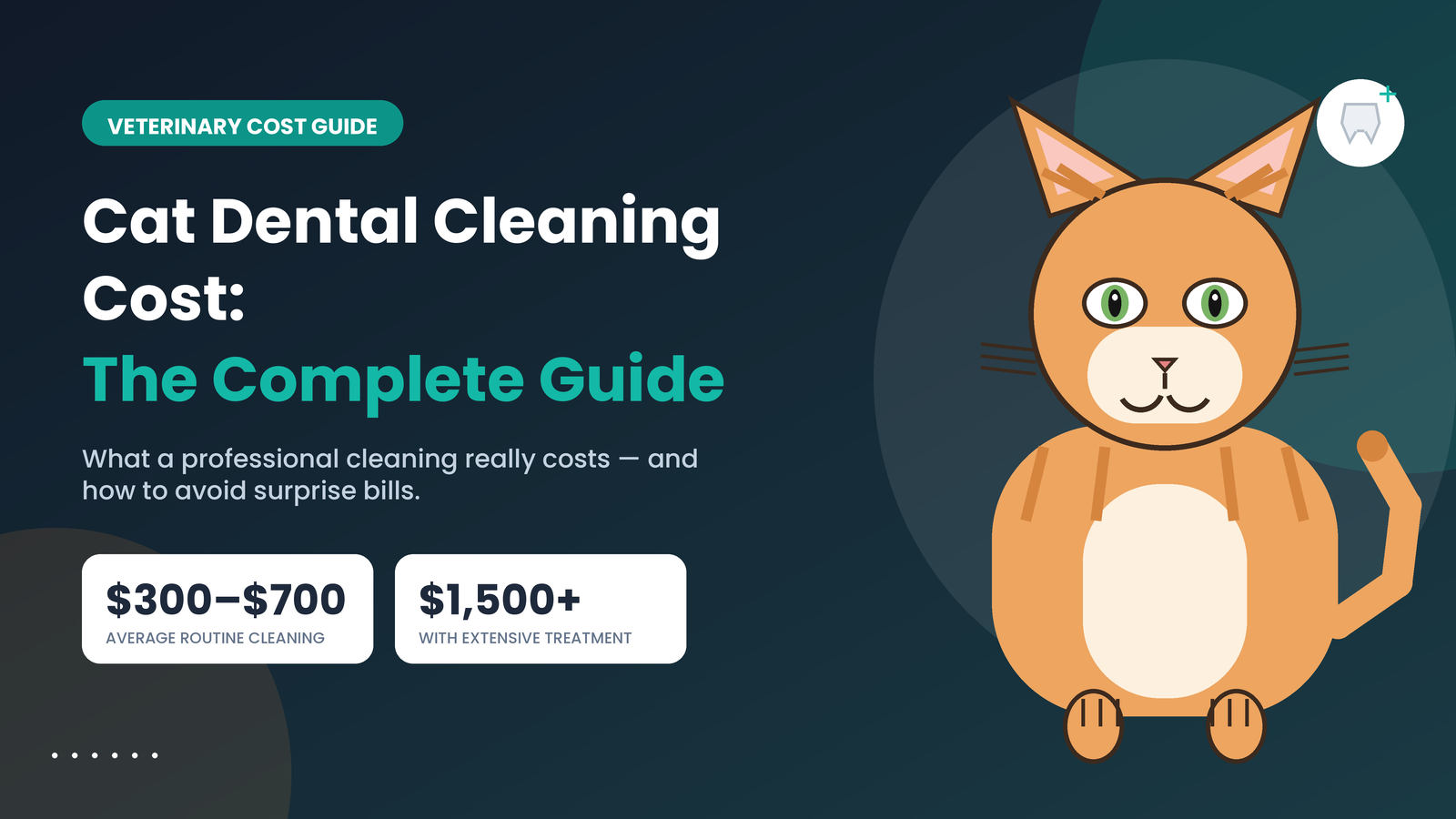
In the U.S., a professional cat dental cleaning costs typically range from $300–$700. This price can rise significantly if your cat needs dental X-rays, tooth extractions, additional testing, or is diagnosed with advanced dental disease. Banfield currently estimates the national U.S. range at $300–$700 for professional pet dental cleanings, though the exact cost varies by clinic and by what’s included in the procedure.
The problem: A clinic’s advertised dental cleaning price might not include everything your cat actually needs. Bloodwork, dental X-rays, anesthesia, extractions, and medication can all raise the final bill.
This guide explains cat dental cleaning cost, what is included in a typical procedure, why prices vary, and how you may be able to reduce your veterinary dental expenses.
Key Takeaways
| Cat Dental Care | Average U.S. Cost |
| Routine professional cleaning | $300–$700 |
| With additional diagnostics | $400–$800+ |
| Cleaning with tooth extractions | $800–$1,200+ |
| Extensive dental disease with extractions | $1,500–$2,000+ |
These are budget ranges, not fixed prices. Your vet’s charges will vary depending on location, your cat’s age and health, and current oral hygiene status. For example, Banfield estimates professional cat dental cleanings at $322.95 (Clifton, CO), $380.95 (Covington, LA), $456.95 (Eagan, MN), and $519.95 (Carlsbad, CA) — though “service and pricing can vary and additional services may be necessary.”
The final cost largely depends on your veterinarian and the number of teeth that need additional work.
Anesthesia-Free vs. Professional Cleaning
The only truly thorough method is an anesthetized cleaning and exam performed by a qualified vet. It may seem like a lot to put a small cat under anesthesia just to clean its teeth, but according to Banfield, skipping anesthesia has “negative implications for the long-term health and well-being of the pet.” Without it, veterinarians may miss important issues beneath the gumline, leading to more expensive problems later on.
Anesthesia-free cleaning — sometimes offered by mobile groomers — can help manage plaque and gingivitis over time, but it doesn’t allow for a comprehensive assessment (such as X-rays) of concerns below the gumline. This can delay proper treatment for years while dental issues quietly worsen.
Bottom line: Quality of care should come before price.
Cat Dental Cleaning Cost: How Much Is a Cleaning?
$300–$700: The Baseline Estimate
This range applies to a straightforward cleaning, assuming no underlying issues are found during the visit. It covers a substantial amount of veterinary work, including:
- Pre-anesthetic evaluation
- Bloodwork (to check for reaction risk and confirm the cat is healthy enough for anesthesia)
- General anesthesia and monitoring throughout the procedure
- IV fluids and catheter insertion (for monitoring and emergency access)
- A full set of digital dental X-rays (to catch issues below the gumline)
- Scaling of teeth above and below the gumline
- Polishing after scaling
- Oral examination and charting of every tooth
- Pain medication and recovery guidance
Banfield confirms that a standard vet dental cleaning includes a pre-anesthetic exam, pre-anesthetic bloodwork, anesthesia and monitoring, full-mouth digital X-rays, scaling above and below the gumline, polishing, and recovery monitoring.
When Costs Climb Higher
If a challenging or severe oral case is found for example, advanced periodontal disease requiring multiple extractions costs can rise substantially:
- $800–$1,200+ for extractions
- $1,500–$2,000+ for extensive treatment
This is why the advertised “starting price” can be misleading if problems turn up during the exam.
Ask your vet: “What is your estimated cost for a tooth extraction if one or more teeth need to be removed during the procedure?”
Cat Dental Cleaning Cost Breakdown
Understanding each line item can help you avoid overpaying.
- Veterinary Examination — A physical exam to confirm your cat is healthy enough for anesthesia. Usually bundled into the overall dental price, but confirm it isn’t billed separately.
- Pre-Anesthetic Bloodwork — Anesthesia can strain the liver and kidneys, so bloodwork confirms your cat can safely undergo the procedure. At Banfield, these tests are typically bundled, though certain conditions may require extra labs.
- Anesthesia — Nearly all professional cleanings require general anesthesia so the vet can safely work below the gumline. Banfield notes this is mandatory for any thorough cleaning.
- Digital Dental X-Rays — X-rays let the vet see what’s happening beneath the surface. They’re considered standard practice and can reveal periodontal disease, unerupted teeth, root problems, and other issues a visual exam alone would miss.
- Scaling and Polishing — Removes built-up plaque and tartar above and below the gumline, helping prevent further buildup or decay.
- Tooth Extraction — Often the biggest source of unplanned cost, since the number of teeth needing removal can vary widely. Extractions can sometimes double the cost of the appointment due to extended anesthesia, added surgical skill, and post-op diagnostics. Always ask whether pricing is per tooth or a flat rate for multiple extractions.
Cat Dental Cleaning Cost With Extractions
The cat dental cleaning cost with extractions can be considerably higher than a routine cleaning because the procedure may require additional anesthesia time, surgical equipment, medications, and post operative care.
A typical bill might combine:
Base cleaning + anesthesia + diagnostics + X-rays + extraction(s) + medications + additional treatment
Costs can climb into the thousands quickly if complications arise mid-procedure or additional post-operative medication is needed.
Ask your vet: “What happens if you discover a tooth that needs to be pulled during the procedure?”
Why Is Cat Dental Cleaning Cost So High?
Several factors explain why cat dental cleaning cost can seem surprisingly high compared with the price of a basic veterinary examination.
- A veterinarian and a veterinary technician/assistant are present throughout the procedure to monitor your cat.
- Equipment costs are significant dental scaling and polishing tools, general anesthesia equipment, and dental X-ray machines can each cost thousands of dollars.
- Bloodwork and lab fees are needed for basic diagnostics.
- IV fluids and anesthesia carry their own costs.
- Surgical instruments and medications used during the procedure add to the bill.
- Post-operative care instructions and take-home medications may be billed separately or bundled, depending on the practice.
While the price may seem steep, the veterinary team is often providing 1–3 hours of hands-on attention — closely monitoring anesthesia and performing precise dental work. Part of the cost also reflects the team’s ongoing training and up-to-date knowledge of animal dentistry.
Frequently Asked Questions
Do cat dental cleanings need anesthesia?
Yes. Cats won’t stay still long enough for a thorough exam and deep cleaning, and attempting one without anesthesia isn’t a safe or comfortable option for the animal. Dental scaling requires careful access under and around the gumline, which isn’t possible while a cat is awake and moving.
Is an anesthesia-free cleaning ever a better choice?
No. Anesthesia-free cleanings generally only remove surface plaque. A truly thorough assessment including full-mouth digital X-rays and probing beneath the gumline can’t be done without anesthesia. Choosing an anesthesia-free option to save money can give a false sense of security about your cat’s dental health.
How to Lower Your Cat Dental Cleaning Cost
For many pet owners, feline dental care simply means good food, plenty of affection, and a clean litter box. Even the most attentive cat owner can overlook their cat’s dental health.
But as most pet owners know, veterinary care can get expensive and dental work is no exception. Here’s a look at the common costs associated with professional cat dental cleaning, and some ways to save.
What Happens During a Cat Dental Cleaning?
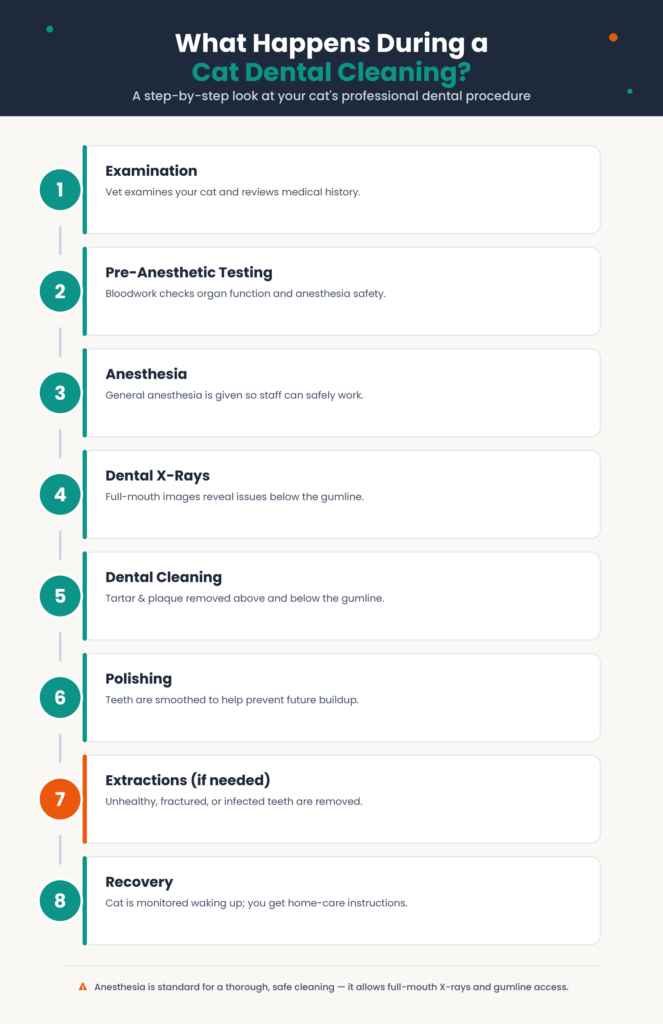
The exact process varies from practice to practice, but a professional cat dental procedure typically follows these steps closely matching the workflow described by Banfield:
- Examination — The veterinarian examines your cat and reviews its medical history.
- Pre-anesthetic testing — May include bloodwork, depending on your cat’s age and condition.
- Anesthesia — Your cat is placed under general anesthesia so staff can safely perform the procedure.
- Dental X-rays — Used to check your cat’s tooth roots below the gumline.
- Dental cleaning — Tartar and plaque are removed from the teeth, both above and below the gumline.
- Polishing — Teeth are smoothed with polishing agents to help prevent plaque from re-adhering.
- Extractions (if needed) — Unhealthy, fractured, or infected teeth may be recommended for removal.
- Recovery — Your cat is monitored as it emerges from anesthesia, and you’re sent home with post-operative instructions.
What Factors Affect the Cost of Cat Dental Cleaning?
Several variables influence your final bill:
- Location — Veterinary costs vary significantly by state and even by city. Banfield’s published national pricing data illustrates just how much this can differ between locations.
- Age of your cat — Older pets may require additional or different pre-anesthetic testing.
- Dental disease severity — A cat with mild tartar buildup may need only a simple cleaning, while severe periodontal disease could require extensive treatment.
- Tooth extractions — Often one of the costliest components of a dental procedure.
- Dental radiographs (X-rays) — Costs can add up quickly if X-rays are billed separately, especially when disease or extractions are involved.
- Bloodwork and other diagnostics — Added tests increase the bill depending on your cat’s health status.
- Type of veterinary clinic — Prices differ between private practices, specialists, teaching clinics, and clinics focused on affordability.
Does Cat Insurance Cover Cleaning?
Pet insurance can sometimes help reduce your cat dental cleaning cost, but coverage depends heavily on the policy. Most standard pet insurance policies do not cover routine preventive dental cleanings, while some wellness plans may provide benefits for dental care.
If your plan does offer dental coverage, check the details for:
- Preventive and routine care coverage
- Dental disease coverage
- Dental injury coverage
- Waiting periods
- Pre-existing condition exclusions
- Daily/annual benefit limits
- Deductible requirements
- Copay percentage
Don’t assume a plan advertising “cat dental benefits” will actually cover your specific situation read the fine print carefully, since “dental maintenance” coverage often excludes routine cleanings.
How to Reduce Cat Dental Cleaning Cost
If the estimated cat dental cleaning cost is higher than expected, there are several ways to compare prices and potentially reduce your out of pocket expenses without compromising necessary veterinary care.
Compare Veterinary Estimates
Shop around, but make sure you’re comparing apples to apples not all clinics include the same services in their quoted price. Ask each clinic directly:
- Does the quote include anesthesia?
- Will bloodwork be performed?
- Will X-rays be taken?
- Does it include scaling and polishing?
- What do extractions cost, and how are they billed?
- Are medications included?
Getting comparable, itemized quotes makes it much easier to judge whether $400 or $700 is actually the better deal.
Find Affordable Veterinary Clinics
Low-cost dental services or non-profit veterinary groups are often available in major urban centers. Just be sure any discounted estimate still includes everything a standard procedure requires.
Look Into Wellness Programs
Some clinics bundle dental cleanings into wellness packages with a small monthly payment. For example, Banfield’s Senior Care Plus and Active Care Plus Optimum Wellness Plans include a cleaning or a portion of one each year.
Ask About Seasonal Discounts
Some practices run dental cleaning promotions at certain times of year. It doesn’t hurt to ask if your vet offers this.
Questions to Ask Your Veterinarian Before Booking
- What does the quote include?
- Is anesthesia included?
- Is pre-anesthetic bloodwork included?
- Is a full-mouth oral radiograph included?
- How will I be charged for extractions?
- Will my vet call before performing additional procedures?
- What’s the expected total cost if extractions are necessary?
- Are take-home medications and post-operative visits included?
Getting answers to these questions upfront can help you avoid unexpected bills.
How Often Does a Cat Need Its Teeth Cleaned?
Your veterinarian’s assessment and experience should guide how often your cat needs a professional cleaning. Consistent at-home care can help manage dental disease between cleanings. Banfield recommends regular brushing with pet-safe toothpaste and VOHC-approved dental products.
⚠️ Never use human toothpaste on a cat some ingredients can be harmful to pets.
Common Signs Your Cat May Need Dental Care
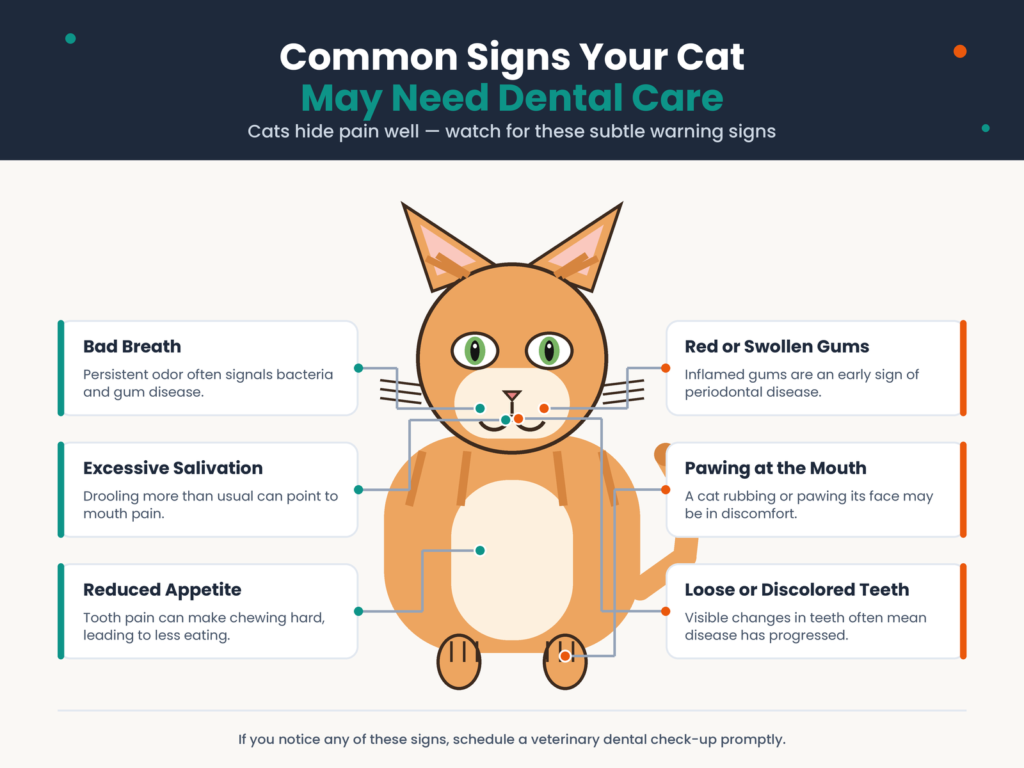
Cats are skilled at hiding pain and dental issues, so watch for:
- Bad breath
- Red or swollen gums
- Excessive salivation
- Pawing or rubbing at the mouth
- Reduced appetite
- Loose or discolored teeth
- Pouncing or unusual reactions while eating
- Coughing or vomiting
These symptoms also flagged by Banfield warrant a veterinary consultation.
Is Cat Dental Cleaning Worth It?
The bill can be high, but delaying routine dental care often allows existing conditions to worsen. A professional cleaning removes plaque and tartar and uncovers problems that a standard exam alone can’t catch. Understanding what’s involved and what happens if you put it off helps put the cost in perspective.
The real question isn’t just the price of the procedure, but what’s included and how the clinic handles unexpected findings or complications. Understanding both will help you estimate the true cost of your cat’s dental care.
Key Takeaways
A standard dental cleaning for a typical U.S. cat costs $300 to $700 though this is a general range that can be lower or significantly higher depending on your cat’s needs. A typical cleaning includes anesthesia, bloodwork, dental imaging, scaling, polishing, and monitoring. If extractions or additional treatment are needed, costs can climb to $800–$1,200+ or more.
Get an itemized estimate and discuss with your vet exactly what’s covered for the quoted price. Don’t judge dental service quality by price alone factor in the thoroughness of the evaluation, potential surgical costs, take-home treatments, follow-up visits, and standard testing to get the “real” number.
Also Read : How Much Are Braces Without Insurance? 2026 Best Cost Guide
FAQ
What Is the Average Cat Dental Cleaning Cost?
The average cat dental cleaning cost for a routine professional procedure in the U.S. is generally around $300 to $700. However, your actual bill can be higher if your cat needs dental X-rays, extractions, additional testing, medications, or treatment for significant dental disease.
How can I save money on cat dental cleaning?
You can find lower-cost dental services, but don’t assume a lower price means lower-quality care read reviews, tour the facility if possible, and ask about staffing. Veterinary wellness clinics can be another affordable option. Ask about seasonal discounts, and consider a pet insurance plan with dental benefits or routine check-up coverage to help offset costs.
Should cats be fed a special diet before a dental cleaning?
Confirm this with your vet you may need to follow specific food and water instructions, especially if bloodwork is required before anesthesia. It’s also best to avoid feeding your cat right before the visit to reduce the risk of stomach upset or vomiting during recovery. Your vet should walk you through any dietary guidelines ahead of the procedure.
Are dental X-rays included in the price?
Not always. Before booking, check with the clinic about whether full-mouth dental X-rays are included in the quoted cost.
Will pet insurance cover cat dental cleaning?
It depends on your individual plan. Some standard pet insurance policies don’t cover preventive teeth cleaning, though a wellness program may include dental care check directly with your provider.
Why is cat dental cleaning so expensive?
General anesthesia, monitoring throughout the procedure, bloodwork, dental X-rays, specialized dental instruments, and professional scaling or extractions all add up to make the total cost higher than many owners expect.
Can I find a cheap cat dental cleaning?
Yes, low-cost veterinary clinics, nonprofit animal organizations, teaching hospitals, wellness programs, or promotional deals at a vet clinic can all offer more affordable cat dental cleaning. Just make sure the quote covers the same level of service you’d get elsewhere.
How can I prevent the need for expensive dental cleanings in the future?
Taking your cat for annual exams and brushing her teeth regularly at home can reduce the risk of gum disease and tartar/plaque buildup, and can help catch problems early. Banfield recommends consistent dental brushing using veterinarian-approved dental products.
Leave a Reply