Is GAP Insurance Worth It?
If you’re financing or leasing a car, you may have been offered GAP insurance at the dealership. And if you’re like most people, the first question is probably simple: Is GAP insurance actually worth the money?
The answer depends on one important thing: whether you could owe more on your car than the car is worth.
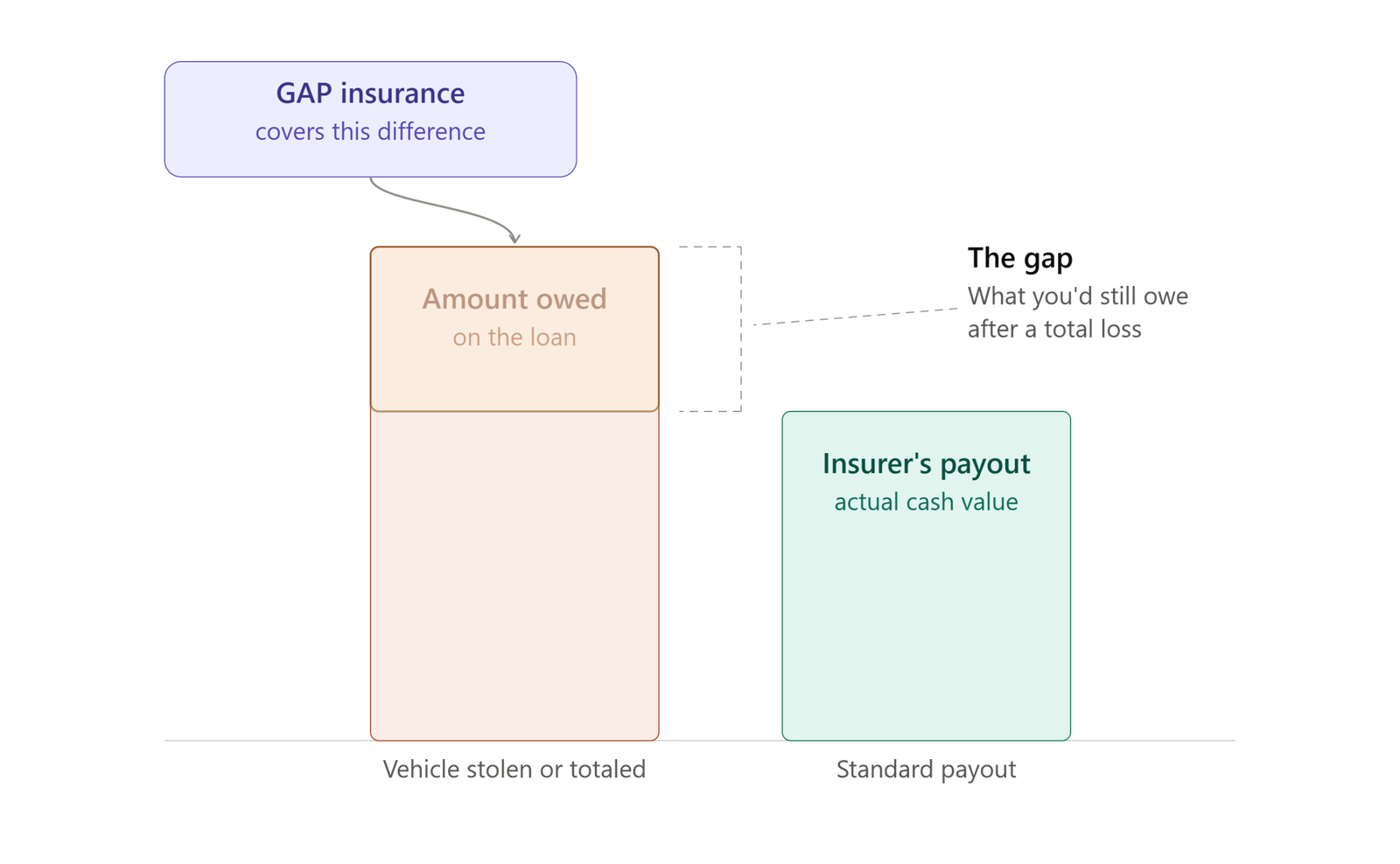
GAP insurance is designed to cover that difference if your vehicle is stolen or declared a total loss. Standard auto insurance generally pays based on the vehicle’s value, while GAP coverage can help cover the remaining loan or lease balance when that amount is higher.
For someone with a large loan balance, a small down payment, a long loan term, or a leased vehicle, GAP insurance can provide valuable protection. But if you’ve built enough equity in your car, paying for GAP coverage may no longer make sense.
Let’s look at when GAP insurance is worth it, when you can probably skip it, and how to decide based on your own numbers.
What Is GAP Insurance?
GAP stands for Guaranteed Asset Protection.
GAP insurance is generally an optional product designed to cover the difference between your vehicle’s value and the amount you still owe on your loan or lease. The Consumer Financial Protection Bureau explains GAP insurance in more detail.
It is an optional product that is intended to cover the difference between what you owe on your vehicle and what your auto insurer pays if the vehicle is stolen or totaled.
For example, imagine you:
- Owe $28,000 on your car
- Your car is worth $22,000
- Your insurance company pays $22,000 after a covered total loss
- You still owe $6,000 on the loan
Without GAP coverage, you could potentially be responsible for that $6,000 difference, depending on your policy and circumstances.
With qualifying GAP coverage, the policy may cover some or all of that difference.
That’s the “gap” GAP insurance is designed to address.
Is GAP Insurance Worth It?
GAP insurance can be worth it if you’re likely to owe more than your vehicle is worth and you couldn’t comfortably pay the difference yourself.
It tends to make the most sense when you:
- Made a small down payment
- Took out a long auto loan
- Leased the vehicle
- Rolled negative equity from an old car loan into the new loan
- Bought a vehicle that depreciates relatively quickly
- Would struggle financially to pay a large loan balance after a total loss
On the other hand, GAP coverage may be less useful if you made a large down payment, have already paid down most of the loan, or have enough savings to comfortably handle a potential gap.
The key isn’t simply whether you bought a new or used car. It’s the relationship between your remaining loan balance and the vehicle’s current value.
Why Does a GAP Happen in the First Place?
Cars can lose value faster than you pay down the loan, particularly during the early part of a loan.
Suppose you finance a $30,000 vehicle and owe $29,000 shortly after purchasing it. If the vehicle’s value falls to $24,000, you could be $5,000 “upside down” on the loan.
That means you owe more than the vehicle is worth.
If the vehicle were totaled at that point, your standard insurance settlement could be based on its value rather than the amount you originally paid or the amount you still owe.
This is why GAP coverage can be particularly relevant early in a loan.
When Is GAP Insurance Most Worth It?
1. You Made a Small Down Payment
A small down payment means you start the loan owing a large portion of the vehicle’s purchase price.
If the car depreciates quickly, you may end up owing more than it’s worth.
A larger down payment, by contrast, gives you more initial equity and can reduce the likelihood of being upside down.
Some insurers and industry experts specifically identify low down payments as a situation where GAP coverage is worth considering.
2. You Have a Long Auto Loan
Longer loans can spread payments over many years.
That can make the monthly payment more manageable, but it also means the loan balance may remain relatively high while the vehicle continues to depreciate.
A 72-month or 84-month loan, for example, deserves closer consideration than a short loan because you may spend longer carrying a substantial balance.
3. You’re Leasing a Car
Leasing is another situation where GAP coverage can be particularly relevant.
However, don’t automatically buy a separate GAP policy just because you’re leasing.
Check your lease agreement first. Some leases already include GAP protection or a similar waiver.
Paying for duplicate coverage would be unnecessary.
4. You Rolled Negative Equity Into Your New Loan
This is an easy situation to overlook.
Imagine you owe $5,000 more on your old vehicle than it’s worth. You trade it in and that $5,000 gets incorporated into financing for your next vehicle.
Now your new loan starts with additional debt that isn’t represented by the value of the new car.
That can increase the chance of being upside down, making GAP coverage more attractive.
5. You Couldn’t Afford a Large Out-of-Pocket Gap
This may be the biggest practical question.
Imagine you owe $25,000 but your vehicle is worth only $20,000.
Could you comfortably come up with $5,000 if the car were totaled tomorrow?
If the answer is no, GAP insurance could provide valuable financial protection if your policy covers that situation.
When Is GAP Insurance Probably Not Worth It?
GAP insurance isn’t automatically a good deal for every driver.
You may have less reason to buy it if:
You Own the Car Outright

If you’ve completely paid off your vehicle, there is no remaining auto loan balance for GAP insurance to address.
You Owe Less Than Your Car Is Worth
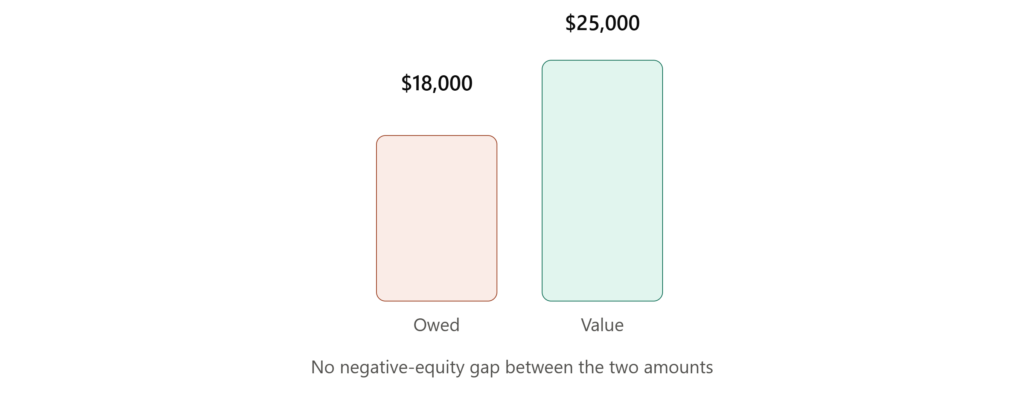
Suppose your car is worth $25,000 and you owe $18,000.
There isn’t currently a negative-equity gap between those two amounts.
In that situation, GAP coverage may provide little benefit.
You’ve Paid Down Most of Your Loan
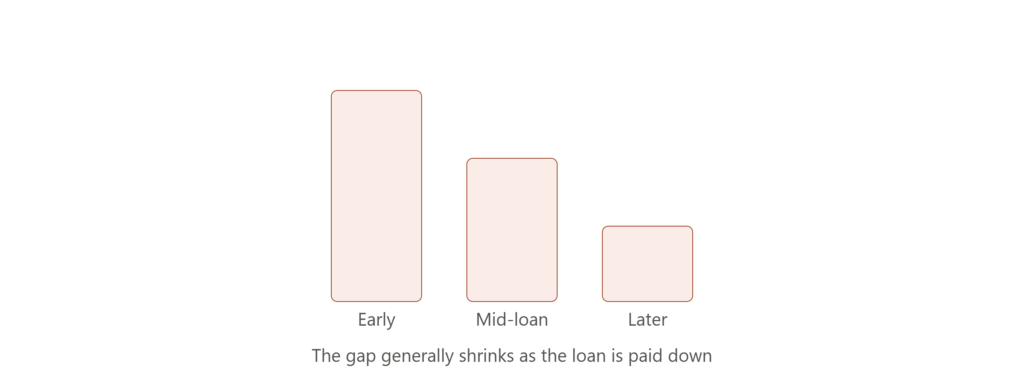
Your need for GAP coverage can decrease as your loan balance falls.
That’s because the difference between what you owe and what your car is worth may become smaller over time. AAA notes that the gap will generally shrink as the loan or lease is paid down.
You Have Enough Savings to Cover the Difference

If you could easily cover a potential gap from your savings, you may decide that paying for GAP coverage isn’t necessary.
This ultimately comes down to how much financial risk you’re comfortable taking.
How Much Does GAP Insurance Cost?
The cost varies depending on where you purchase it, the vehicle, the lender or insurer, and the terms of the coverage.
One important point is how you pay for it.
If the GAP cost is added to your auto loan, you’re borrowing money to pay for the coverage. That means you can also pay interest on the GAP charge over the life of the loan. The CFPB specifically warns that financing optional add-ons can increase the total amount you pay.
That’s why you shouldn’t judge GAP insurance solely by the monthly payment.
A dealer might say:
“It’s only a few extra dollars a month.”
But the more useful question is:
How much will the GAP coverage cost me in total?
Should You Buy GAP Insurance From the Dealer?
Not necessarily.
Dealerships and lenders may offer GAP coverage when you finance a vehicle, but you can also find GAP products through some insurance companies and other providers.
The CFPB recommends shopping around because prices can vary.
Also, GAP is generally an optional product. A lender or dealer generally cannot require you to purchase GAP insurance simply to obtain an auto loan.
Before agreeing to it, compare:
- Total price
- Coverage limits
- Exclusions
- Whether your deductible is covered
- How long the coverage lasts
- Whether the policy pays the entire remaining balance or has limitations
- Cancellation and refund rules
How to Calculate Whether You Need GAP Insurance
You don’t need a complicated formula.
Start with two numbers:
Your current loan balance
minus
Your vehicle’s current value
For example:
Loan balance: $27,000
Vehicle value: $23,000
Potential gap: $4,000
That doesn’t automatically mean you need GAP insurance. Your actual coverage depends on your policy, how the insurer determines the vehicle’s value, and the terms of the GAP product.
But the calculation gives you a starting point.
You can also ask yourself:
“If my car were totaled tomorrow, could I comfortably pay the difference between my loan balance and the insurance settlement?”
If you couldn’t, GAP insurance may be worth considering.
What Does GAP Insurance Not Cover?
GAP insurance isn’t a replacement for regular auto insurance.
It generally isn’t designed to pay for ordinary repairs, maintenance, or damage that doesn’t result in a covered total loss or theft.
It also doesn’t necessarily cover every dollar you owe. Policies can have exclusions, limits, eligibility requirements, and other conditions.
For example, AAA notes that GAP coverage may have coverage limits and may not cover your deductible.
That’s why you should read the actual GAP contract rather than assuming it covers everything.
Can You Cancel GAP Insurance?
In many cases, GAP coverage can be canceled, although the exact rules depend on the contract and provider.
The CFPB states that consumers can cancel optional add-on products such as GAP insurance and may be entitled to a refund in certain circumstances, such as selling, refinancing, or paying off the loan early. Check your paperwork and confirm the specific refund rules with the lender, dealer, or provider.
If you’ve recently purchased GAP coverage and are reconsidering it, check the cancellation terms before doing anything else.
Is GAP Insurance Worth It on a Used Car?
It can be.
Being a used car doesn’t automatically mean you don’t need GAP insurance.
The important question is still:
Do you owe more than the vehicle is worth?
A used car can still have negative equity if you made a small down payment, financed it for a long period, rolled previous debt into the loan, or paid more for the vehicle than its current market value.
So don’t use “new vs. used” as the deciding factor. Look at your actual loan balance and vehicle value.
Is GAP Insurance Worth It on a New Car?
It can be particularly useful during the early stages of financing a new car because the vehicle may lose value while you still have a relatively high loan balance.
However, buying a new car doesn’t automatically mean you need GAP insurance.
If you made a substantial down payment and quickly build equity, the potential benefit may be much smaller.
A Simple Way to Decide
Here’s a practical way to think about it:
| Your Situation | GAP Insurance |
|---|---|
| You owe significantly more than the car is worth | Worth considering |
| Small down payment | Worth considering |
| 72- or 84-month loan | Worth considering |
| Rolled negative equity into the loan | Worth considering |
| You lease the vehicle | Check your lease first |
| You owe less than the car is worth | May not be necessary |
| You’ve paid off the loan | Not needed |
| You can easily cover a potential gap yourself | May not be necessary |
This isn’t a universal rule. Your actual GAP contract and auto insurance policy determine what would happen after a total loss.
The Bottom Line: Is GAP Insurance Worth It?
GAP insurance can be worth it if you have negative equity and couldn’t comfortably afford to pay the difference yourself after a total loss.
It’s especially worth considering if you made a small down payment, took out a long loan, leased your vehicle, or rolled negative equity from another vehicle into your financing.
But GAP insurance isn’t something every driver needs forever.
As you pay down your loan and build equity, the potential “gap” can become smaller. At that point, continuing to pay for GAP coverage may no longer provide enough value to justify the cost.
Before buying it, compare prices from different providers, check whether your lease or loan already includes similar protection, and read the exclusions carefully.
The goal isn’t simply to decide “GAP insurance is good” or “GAP insurance is a waste of money.”
The better question is:
“If my car were totaled tomorrow, how much money could I potentially be left owing—and could I afford it?”
That answer can tell you much more about whether GAP insurance is worth it for you.
Frequently Asked Questions
Is GAP insurance worth it for everyone?
No. GAP insurance is most useful when you owe more on your vehicle than it is worth and would have difficulty paying the difference after a total loss.
Does GAP insurance cover a totaled car?
GAP insurance is designed to address the difference between the vehicle’s value and the remaining loan or lease balance after a covered total loss or theft. It does not replace your primary auto insurance.
Is GAP insurance required?
Generally, GAP insurance is optional for an auto loan. However, specific lease agreements or financing arrangements can have different requirements, so check your contract.
Can you get GAP insurance after buying a car?
Depending on the provider, you may be able to purchase GAP coverage after buying your vehicle. Eligibility and time limits vary, so check with your insurer or lender.
When should you cancel GAP insurance?
You may want to reconsider GAP coverage once you no longer have significant negative equity. If your loan is paid off, GAP insurance is generally no longer needed.
Does GAP insurance cover your deductible?
Not necessarily. Coverage varies by policy, and some GAP policies may exclude or limit deductible coverage. Always check the specific contract.
Can GAP insurance save you money?
Potentially. If your car is totaled while you owe more than it’s worth, GAP coverage can help protect you from having to pay the covered difference out of pocket. But if you never have a qualifying loss, the coverage may not provide a financial benefit.
Disclaimer: This article is for general educational purposes and isn’t a substitute for reviewing your insurance policy, loan agreement, lease contract, or getting advice from a qualified insurance professional. GAP coverage varies by provider, state, loan or lease agreement, and policy terms.
Leave a Reply